

If you’ve been promised that 100 crunches and lemon water will melt your waist… I wish. Truth: you can reduce belly fat from home – without a gym membership, but you’ll do it by stacking simple, repeatable habits that shift your overall energy balance, nudge hormones in your favor, and protect your muscle. Let’s unpack the why behind each habit, with the friendliest science tour guide you know. 🙂
Step 1: Know your real opponent: visceral fat
“Belly fat” isn’t one thing. There’s the pinchable stuff under the skin (subcutaneous fat) and the deeper, more metabolically active fat that surrounds your organs (visceral fat). Too much visceral fat raises the risk of insulin resistance, type 2 diabetes and heart disease. The good news? It’s highly responsive to lifestyle change—diet, movement, and better sleep trim it down.
How to track progress at home: measure your waist. Place a tape at the midpoint between your lowest rib and the top of your hip bone (iliac crest), exhale normally, and read the number. As a rough guide, many clinical thresholds consider ≥102 cm (men) and ≥88 cm (women) as “high risk” (ethnicity matters; guidelines vary by population). Measure the same way, same time of day, once a week.
Step 2: The non sexy, unbeatable foundation is a calorie deficit
No deficit, no fat loss. That doesn’t mean starving; it means your weekly calories out slightly exceed calories in. If you like tools, NIH’s Body Weight Planner helps you estimate a realistic intake and activity combo. Keep it steady and think a gentle 300–500 kcal/day average rather than dramatic swings.
Easy wins:
- Build plates around whole foods; limit ultra-processed add-ons.
- Nudge portions down 10–20% before you overhaul everything.
- Pre-commit: plan tomorrow’s meals tonight.
Step 3: The most overlooked fat-loss lever is NEAT
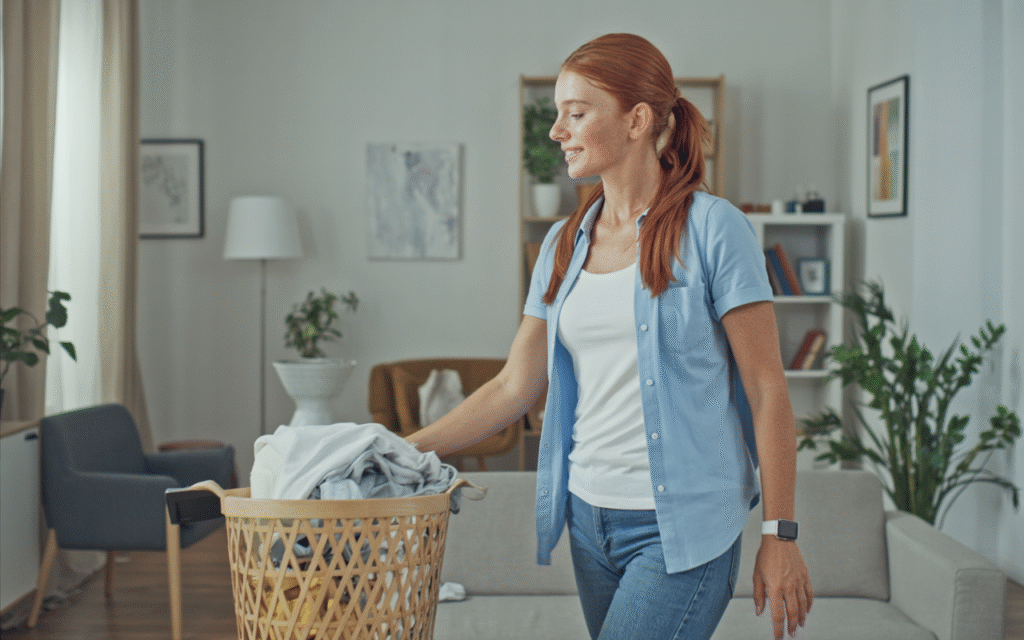
NEAT = Non-Exercise Activity Thermogenesis: the calories you burn outside “workouts” like walking, cleaning, playing with your kids, pacing on a call, even fidgeting. Classic research shows NEAT varies wildly between people and can add hundreds of kcal/day without a single “workout.” Translation: small movements, all day, really count.
Make NEAT your default:
- 5-minute house laps every hour.
- Stand for messages/phone calls.
- Two brisk 10-minute walks (after meals = bonus).
For general health, aim for 150 minutes/week of moderate activity plus 2 days of strength work—totally doable at home.
Step 4: Strength training is your metabolism’s best friend (no weights needed)
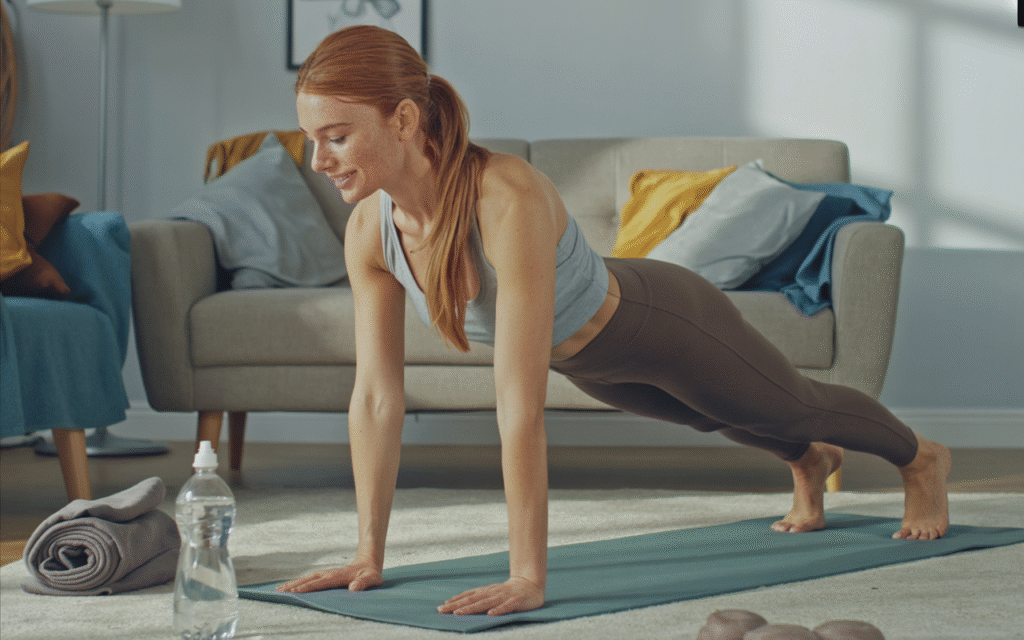
More lean muscle = a higher resting burn and better body shape while you’re in a deficit. Bodyweight moves work: push-ups, squats, lunges, planks, hip hinges. Studies show push-ups can deliver strength and hypertrophy gains comparable to light-load bench press when the effort is matched. And resistance training helps preserve muscle during weight loss.
At-home starter (15–20 min, 3×/week):
- 3 rounds: 10–15 squats, 8–12 push-ups (hands on counter if needed), 10–12 lunges/leg, 20–30 s plank, 20 mountain climbers/side.
- Rest 45–60 s between moves. Progress by adding reps or a fourth round.
(Plus your walking/NEAT on the other days—remember, the combo matters.)
Step 5: Eat for satiety & muscle: protein and fiber
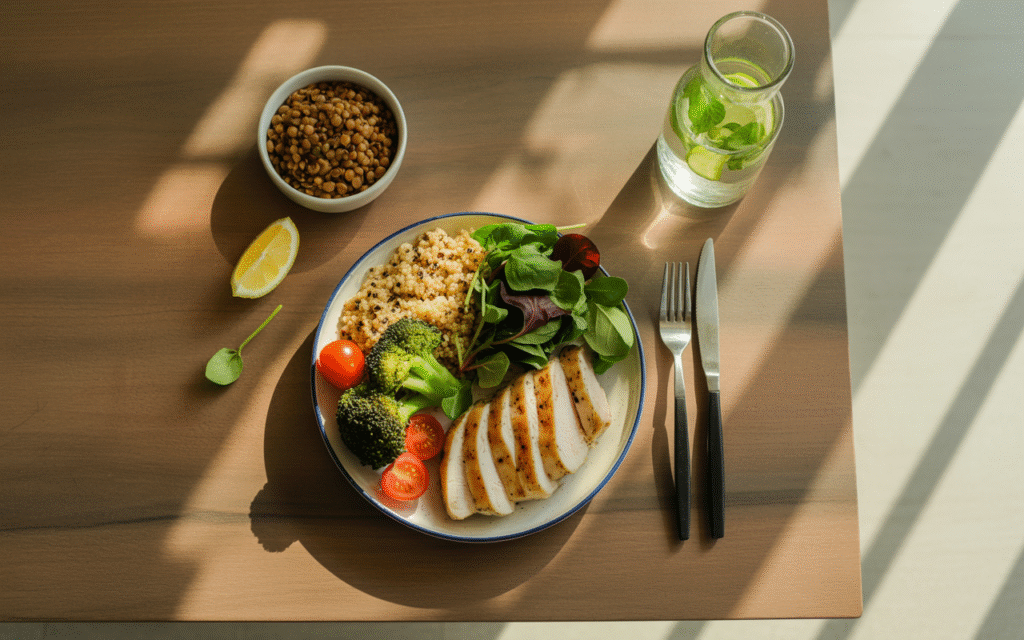
When you’re eating a bit less, protein protects your muscle and helps you stay full. Meta-analyses suggest around 1.2–1.6 g/kg/day during fat loss for most adults is a smart range, paired with resistance training. Distribute it across meals.
Fiber adds volume, steadies blood sugar, and quietly curbs cravings. Most adults fall short; targets are ~25 g/day (women) and 38 g/day (men) from food. Think beans, lentils, oats, berries, veggies, nuts, seeds, whole grains.
Simple swaps:
- Breakfast: Greek yogurt + berries + oats (or eggs + veg).
- Lunch: Lentil-veggie bowl with olive oil & lemon.
- Dinner: Chicken/tofu, big salad, roasted veg, small starch.
Step 6: Sleep is your fat-loss force multiplier
Short sleep pushes hunger up and satiety down via hormones like ghrelin and leptin and it nudges you toward ultra-palatable snacks. Aim for 7–9 hours of consistent, quality sleep. Even a single night of restriction shifts those hormones; two nights do more. Your workouts feel harder, your willpower thinner. Does that sound familiar?
Doable fix tonight: 30-minute wind-down, devices off, cool dark room, same bedtime.
Step 7: Liquid sugar quietly sabotaging your deficit
Your body doesn’t “notice” liquid calories as well, so you don’t compensate later. This is an easy path to surplus. Cutting sugar-sweetened beverages is one of the highest-leverage changes you can make for fat loss (and health). Choose water, unsweetened tea/coffee, or infused water.
Step 8: About those crunches myth, with a nuance
You can’t command fat to leave one spot. Ab exercises strengthen and define the muscles underneath, but they don’t selectively burn belly fat. Randomized trials show six weeks of ab work alone didn’t reduce abdominal fat. Newer research hints at tiny local effects, but for real-world change you still need overall fat loss. So: do your planks, but don’t expect them to “melt” your waist by themselves.
A gentle, realistic 14-day home plan
Daily:
- Walk 20–30 minutes (can be split), plus “micro-moves” each hour (1–3 minutes).
- Hydrate (replace liquid calories).
- Protein with every meal; build fiber (aim toward your target).
- 7–9 hours sleep routine.
Strength (3 days/week): the 15–20 min circuit above.
Track: morning waist, weekly average weight, and how you feel (energy, hunger, sleep). Tiny wins count.
Quick answers to common questions
“Is visceral fat really easier to lose?”
With modest lifestyle changes, visceral fat tends to decrease readily. This is one reason even small weight losses improve health markers. Exercise (especially higher-effort aerobic) shows strong effects; consistent diet changes matter too.
“How much exercise do I have to do?”
For health: 150 minutes/week moderate activity + 2 strength days. For fat loss, you’ll likely need that plus a calorie deficit. NEAT makes the difference between spinning your wheels and quietly losing.
“What should my macros be?”
Keep protein in the 1.2–1.6 g/kg/day zone, fill the rest with mostly high-fiber carbs and healthy fats that fit your calories. Simpler: center meals on protein + plants, season to joy.
“How do I measure my waist correctly?”
Midpoint between your lowest rib and the top of your hip bone; tape snug, not compressing, at the end of a normal exhale. Be consistent.
The take-home (and a hug)
No magic drinks. No punishment workouts. Just a friendly formula:
Eat a bit less, move a bit more (especially all day), lift your bodyweight, sleep like it matters, skip liquid sugar, and repeat. Your waist, and of course your labs, will thank you. You’ve got this. 💪
Obesity development over the years.
Now, that you know that obesity is a real danger for your health, it is good to know that obesity is becoming more and more a problem, all over the world. This is due to eating habits, industrial processed food and many more things. This graphic gives you a simple overview about obesity in different countries.
Obesity & Related Health Trends
Interactive demo: adult obesity prevalence (%), diabetes prevalence (%), and cardiovascular disease death rate (per 100k), 1990–present. Hover to inspect values.